Buy mp3cool.eu ?
We are moving the project
mp3cool.eu .
Are you interested in purchasing the domain
mp3cool.eu ?
domain@kv-gmbh.de · 0541-91531010
Buy mp3cool.eu ?
Why is TCP slower than UDP?
TCP is slower than UDP because it is a connection-oriented protocol, meaning it establishes a connection between the sender and receiver before transmitting data. This involves a three-way handshake process, which adds overhead and latency to the communication. Additionally, TCP includes error-checking and retransmission of lost packets, which can further slow down the transmission of data. In contrast, UDP is a connectionless protocol that does not have the same level of error-checking and retransmission, making it faster but less reliable for transmitting data. **
Are incoming TCP/UDP packets being blocked?
To determine if incoming TCP/UDP packets are being blocked, you can check the firewall settings on the network or system in question. Look for any rules that may be blocking incoming traffic on specific ports or protocols. Additionally, you can use network monitoring tools to analyze incoming traffic and see if any packets are being dropped or blocked. If packets are being blocked, you may need to adjust the firewall settings to allow the desired traffic to pass through. **


Similar search terms for UDP
Top-Angebote
Products related to UDP:
-
Motivational Bible-Verse Audio Player by BrylaneHome in GrayAbout This Product Listen and be inspired anywhere with the Motivational Bible-Verse Audio Player. Preloaded with 300 uplifting Bible verses in English and Spanish, its perfect for home, travel, or daily reflection. Compact and easy to clean, its a...54,99 $*Shipping: 13,98 $Secure redirect to the provider
-
Sonos Five HiFi Speaker with WiFi, 3.5 mm Line In, Support for Hi-Res Audio Streaming - Black, New.gadcet-pdp{--g-green:#00a651;color:#1f2430;line-height:1.55;font-size:inherit;max-width:760px}.gadcet-pdp>*:first-child{margin-top:0}.gadcet-pdp p{margin:0 0.9em}.gadcet-pdp h3{font-size:1.05em;font-weight:600;color:#11161f;margin:1.4em 0.5em;padding-left:.5em;border-left:3px solid var(--g-green);border-radius:0;line-height:1.3}.gadcet-pdp ul{list-style:none!important;margin:0 0.9em;padding:0!important}.gadcet-pdp ul li{position:relative;padding:.1em 0.1em 1.5em;margin:0}.gadcet-pdp ul li::before{content:"";position:absolute;left:.16em;top:.45em;width:.36em;height:.66em;border:solid var(--g-green);border-width:0.14em.14em 0;transform:rotate(45deg)}.gadcet-pdp table{width:100%;border-collapse:collapse;margin:.3em 0 1em;font-size:.95em;border:1px solid #e7e9ee!important;border-radius:8px;overflow:hidden}.gadcet-pdp table td{padding:.5em.8em;border-bottom:1px solid #eef0f4!important;vertical-align:top}.gadcet-pdp table tr:last-child td{border-bottom:0!important}.gadcet-pdp table tr:nth-child(even){background:#f7f9f8}.gadcet-pdp table td:first-child{font-weight:600;color:#454c59;width:40%}@media (max-width:600px){.gadcet-pdp table td:first-child{width:42%}} Bring room-filling, high-fidelity sound to your home with the Sonos Five in Black. Enjoy high-resolution lossless audio streaming over WiFi, flexible wired playback and convenient multi-room listening. Key Features Six Class-D digital amplifiers tuned to the speaker's acoustic architecture Three tweeters for detailed highs and a wide stereo soundstage Three midwoofers for balanced vocals, instruments and bass WiFi streaming with support for high-resolution lossless audio 3.5 mm line-in for compatible turntables, CD players, computers and other audio devices Apple AirPlay 2 support for streaming from compatible Apple devices Trueplay tuning using a supported iOS device Horizontal or vertical placement with orientation-aware processing Can be paired with another Sonos Five for a wider stereo soundstage Capacitive touch controls and a 10/100 Ethernet port Benefits Enjoy powerful, detailed music playback with clear vocals and deep bass Connect wireless and wired audio sources to one versatile speaker Expand your listening across compatible Sonos speakers in multiple rooms Fine-tune bass, treble and loudness through the Sonos app Specifications Brand Sonos Model Five Product type HiFi wireless speaker Colour Black Finish Matte Amplifiers 6 Class-D digital amplifiers Tweeters 3 Midwoofers 3 Wireless connectivity WiFi and Apple AirPlay 2 Wired connectivity 3.5 mm line-in and 10/100 Ethernet WiFi support 802.11a/b/g/n, 2.4 GHz or 5 GHz router support EAN 8717755777140 What You'll Receive One Sonos Five HiFi speaker in Black, supplied in your selected New or Used - Like New condition. Ideal For Ideal for music lovers seeking high-quality home audio, multi-room listening or a speaker with line-in connectivity for compatible turntables, CD players and computers.548,98 £*Shipping: 0,00 £Secure redirect to the provider
-
MGA Entertainment Miniverse Real Music Record Player - Miniature Vinyl Player with Speakers and Furniture - Collectible Music Toy for KidsMiniature scale record player with speakers and furniture. Plays 30-second vinyl clips from Miniverse Real Music records. Includes playable mini vinyl of Classical Rock Remix of Beethoven's 5th Symphony. Comes with two collectible mini speakers and matching furniture for display.23,63 £*Shipping: 3,95 £Secure redirect to the provider
-
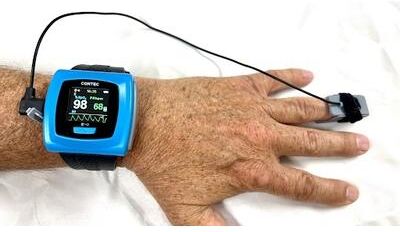
Concord Health Supply Wrist-Worn Pulse Oximeter with Digital Software Download and Download Cable""" Rechargeable Wrist-Worn Pulse Oximeter The wrist pulse oximeter features a color, multi-direction OLED screen with four levels of brightness. The easy-to-read color OLED display can be adjusted to be readable either horizontally or vertically. The..."109,00 $*Shipping: 0,00 $Secure redirect to the provider


-
Why does DHCP use the UDP protocol?
DHCP uses the UDP protocol because it is a connectionless protocol that does not require a persistent connection between the client and the server. This makes it efficient for the dynamic allocation of IP addresses and configuration information to network devices. UDP also allows for quick communication between the client and server without the overhead of establishing and maintaining a connection, which is important for the fast and efficient allocation of IP addresses in a network environment. Additionally, UDP is well-suited for broadcasting and multicasting, which are used by DHCP to discover and communicate with servers on the network. **
-
Do TCP and UDP have the same port?
No, TCP and UDP do not have the same port. While both TCP and UDP use port numbers to identify different communication channels, they have separate sets of port numbers. TCP and UDP each have their own range of port numbers, and a port number used for TCP communication will not be the same as a port number used for UDP communication. This allows for different types of communication to be handled separately and efficiently. **
-
What is the major difference between TCP and UDP?
The major difference between TCP (Transmission Control Protocol) and UDP (User Datagram Protocol) lies in their connection-oriented versus connectionless nature. TCP is connection-oriented, meaning it establishes a connection between the sender and receiver before transmitting data, ensuring data reliability through error-checking and retransmission. On the other hand, UDP is connectionless, meaning it does not establish a connection before sending data, resulting in faster transmission but with no guarantee of data delivery or order. This fundamental distinction makes TCP more suitable for applications requiring reliable data delivery, while UDP is preferred for real-time applications where speed is prioritized over reliability. **
-
What is UDP and how does data input work?
UDP (User Datagram Protocol) is a connectionless protocol that operates at the transport layer of the OSI model. It is used for sending data over a network without establishing a connection. Data input in UDP involves the sender breaking the data into packets, adding a header with necessary information like source and destination ports, and sending it over the network. The receiver then receives the packets and reassembles them to reconstruct the original data. UDP is faster than TCP but does not guarantee delivery or order of packets. **

Why can't the Wiz outlet find the broadcast UDP?
The Wiz outlet may not be able to find the broadcast UDP due to several reasons. It could be a network issue, such as the UDP broadcast being blocked by a firewall or router settings. Additionally, there could be a problem with the Wiz outlet's network configuration or its ability to receive and process UDP broadcasts. It's also possible that there is a compatibility issue between the Wiz outlet and the device or software trying to send the broadcast UDP. Troubleshooting these potential issues and ensuring that the network and devices are properly configured can help resolve the problem. **
What is UDP and how does the data input work?
UDP, or User Datagram Protocol, is a connectionless protocol that operates at the transport layer of the OSI model. It is used to send data over a network without establishing a connection. UDP is often used for applications that require fast transmission of data, such as online gaming, video streaming, and VoIP. Data input in UDP works by breaking the data into small packets and sending them to the destination without any guarantee of delivery or order. Unlike TCP, UDP does not provide error checking or retransmission of lost packets, making it a less reliable but faster option for transmitting data. When the data reaches the destination, the packets are reassembled into the original data. **
Top-Angebote
Products related to UDP:
-
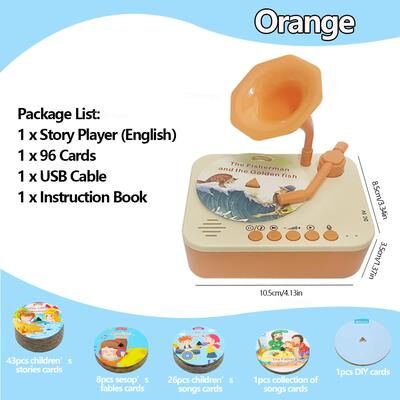
JoyToys Kids Story Player Gramophone With 93 Audio Cards Screen Free Early Learning Music Toy orangeImmerse your child in a world of imagination without screens. This Kids Story Player combines storytelling, music, and interactive learning in a charming gramophoneinspired design that keeps toddlers engaged while supporting early development....69,97 $*Shipping: 0,00 $Secure redirect to the provider
-
Tonies The Highway Rat Audio Figure for Children - Compatible with Toniebox Audio Player - 3+Bring Julia Donaldson's The Highway Rat to life with this Tonies audio figure. Place the character on a compatible Toniebox to start listening to the story, songs, and activities. The screen-free format is designed for children aged 3 and over, encouraging independent listening, imagination, and a love of rhyme. This Tonie follows the Highway Rat on his mischievous journey as he steals snacks from travellers before learning about fairness, kindness, and friendship. The hand-painted character design is made for small hands, making it a tactile, screen-free addition to a Tonies collection for story time, quiet play, or listening together. The audio content runs for approximately 21 minutes, featuring four tracks with a story, songs, and a listening game. A comprehensive instruction booklet is also included. Requires a Toniebox audio player, sold separately. Suitable for children aged 3 years and over.11,36 £*Shipping: 3,95 £Secure redirect to the provider
-
Motivational Bible-Verse Audio Player by BrylaneHome in GrayAbout This Product Listen and be inspired anywhere with the Motivational Bible-Verse Audio Player. Preloaded with 300 uplifting Bible verses in English and Spanish, its perfect for home, travel, or daily reflection. Compact and easy to clean, its a...54,99 $*Shipping: 13,98 $Secure redirect to the provider
-
Sonos Five HiFi Speaker with WiFi, 3.5 mm Line In, Support for Hi-Res Audio Streaming - Black, New.gadcet-pdp{--g-green:#00a651;color:#1f2430;line-height:1.55;font-size:inherit;max-width:760px}.gadcet-pdp>*:first-child{margin-top:0}.gadcet-pdp p{margin:0 0.9em}.gadcet-pdp h3{font-size:1.05em;font-weight:600;color:#11161f;margin:1.4em 0.5em;padding-left:.5em;border-left:3px solid var(--g-green);border-radius:0;line-height:1.3}.gadcet-pdp ul{list-style:none!important;margin:0 0.9em;padding:0!important}.gadcet-pdp ul li{position:relative;padding:.1em 0.1em 1.5em;margin:0}.gadcet-pdp ul li::before{content:"";position:absolute;left:.16em;top:.45em;width:.36em;height:.66em;border:solid var(--g-green);border-width:0.14em.14em 0;transform:rotate(45deg)}.gadcet-pdp table{width:100%;border-collapse:collapse;margin:.3em 0 1em;font-size:.95em;border:1px solid #e7e9ee!important;border-radius:8px;overflow:hidden}.gadcet-pdp table td{padding:.5em.8em;border-bottom:1px solid #eef0f4!important;vertical-align:top}.gadcet-pdp table tr:last-child td{border-bottom:0!important}.gadcet-pdp table tr:nth-child(even){background:#f7f9f8}.gadcet-pdp table td:first-child{font-weight:600;color:#454c59;width:40%}@media (max-width:600px){.gadcet-pdp table td:first-child{width:42%}} Bring room-filling, high-fidelity sound to your home with the Sonos Five in Black. Enjoy high-resolution lossless audio streaming over WiFi, flexible wired playback and convenient multi-room listening. Key Features Six Class-D digital amplifiers tuned to the speaker's acoustic architecture Three tweeters for detailed highs and a wide stereo soundstage Three midwoofers for balanced vocals, instruments and bass WiFi streaming with support for high-resolution lossless audio 3.5 mm line-in for compatible turntables, CD players, computers and other audio devices Apple AirPlay 2 support for streaming from compatible Apple devices Trueplay tuning using a supported iOS device Horizontal or vertical placement with orientation-aware processing Can be paired with another Sonos Five for a wider stereo soundstage Capacitive touch controls and a 10/100 Ethernet port Benefits Enjoy powerful, detailed music playback with clear vocals and deep bass Connect wireless and wired audio sources to one versatile speaker Expand your listening across compatible Sonos speakers in multiple rooms Fine-tune bass, treble and loudness through the Sonos app Specifications Brand Sonos Model Five Product type HiFi wireless speaker Colour Black Finish Matte Amplifiers 6 Class-D digital amplifiers Tweeters 3 Midwoofers 3 Wireless connectivity WiFi and Apple AirPlay 2 Wired connectivity 3.5 mm line-in and 10/100 Ethernet WiFi support 802.11a/b/g/n, 2.4 GHz or 5 GHz router support EAN 8717755777140 What You'll Receive One Sonos Five HiFi speaker in Black, supplied in your selected New or Used - Like New condition. Ideal For Ideal for music lovers seeking high-quality home audio, multi-room listening or a speaker with line-in connectivity for compatible turntables, CD players and computers.548,98 £*Shipping: 0,00 £Secure redirect to the provider
-
Why is TCP slower than UDP?
TCP is slower than UDP because it is a connection-oriented protocol, meaning it establishes a connection between the sender and receiver before transmitting data. This involves a three-way handshake process, which adds overhead and latency to the communication. Additionally, TCP includes error-checking and retransmission of lost packets, which can further slow down the transmission of data. In contrast, UDP is a connectionless protocol that does not have the same level of error-checking and retransmission, making it faster but less reliable for transmitting data. **
-
Are incoming TCP/UDP packets being blocked?
To determine if incoming TCP/UDP packets are being blocked, you can check the firewall settings on the network or system in question. Look for any rules that may be blocking incoming traffic on specific ports or protocols. Additionally, you can use network monitoring tools to analyze incoming traffic and see if any packets are being dropped or blocked. If packets are being blocked, you may need to adjust the firewall settings to allow the desired traffic to pass through. **
-
Why does DHCP use the UDP protocol?
DHCP uses the UDP protocol because it is a connectionless protocol that does not require a persistent connection between the client and the server. This makes it efficient for the dynamic allocation of IP addresses and configuration information to network devices. UDP also allows for quick communication between the client and server without the overhead of establishing and maintaining a connection, which is important for the fast and efficient allocation of IP addresses in a network environment. Additionally, UDP is well-suited for broadcasting and multicasting, which are used by DHCP to discover and communicate with servers on the network. **
-
Do TCP and UDP have the same port?
No, TCP and UDP do not have the same port. While both TCP and UDP use port numbers to identify different communication channels, they have separate sets of port numbers. TCP and UDP each have their own range of port numbers, and a port number used for TCP communication will not be the same as a port number used for UDP communication. This allows for different types of communication to be handled separately and efficiently. **
Similar search terms for UDP
-
MGA Entertainment Miniverse Real Music Record Player - Miniature Vinyl Player with Speakers and Furniture - Collectible Music Toy for KidsMiniature scale record player with speakers and furniture. Plays 30-second vinyl clips from Miniverse Real Music records. Includes playable mini vinyl of Classical Rock Remix of Beethoven's 5th Symphony. Comes with two collectible mini speakers and matching furniture for display.23,63 £*Shipping: 3,95 £Secure redirect to the provider
-
Concord Health Supply Wrist-Worn Pulse Oximeter with Digital Software Download and Download Cable""" Rechargeable Wrist-Worn Pulse Oximeter The wrist pulse oximeter features a color, multi-direction OLED screen with four levels of brightness. The easy-to-read color OLED display can be adjusted to be readable either horizontally or vertically. The..."109,00 $*Shipping: 0,00 $Secure redirect to the provider
-
JoyToys Kids Story Player Gramophone With Audio Cards Interactive Educational Learning Toy For Toddlers orangeExperience the joy of learning through stories, songs, and imagination with this charming Kids Story Player. Designed for curious toddlers and preschoolers, this interactive gramophonestyle toy transforms screenfree play into an engaging learning...69,97 $*Shipping: 0,00 $Secure redirect to the provider
-
Roku HD Streaming StickTransform any TV into America’s #1 streaming platform with the Roku Streaming Stick HD. Enjoy quick access to 500+ free HD channels, including live news, sports, weather, and more — all from a sleek, compact device that stays out of sight. Key Features TV Streaming Made Easy: Explore popular apps, free movies, shows, and live TV effortlessly. Streaming has never been simpler or more fun. Compact Design, No Compromises: The stick’s slim design won’t block adjacent HDMI ports and even powers directly from your TV — no wall outlet or extra cords needed. All-in-One Remote: Control your TV and Roku device with a single remote. Adjust volume, power on/off, and search using voice commands. Portable Entertainment: Take your favorite shows with you while traveling without needing to log in on other devices. Bluetooth Headphone Mode: Stream privately by pairing your headphones directly to the Roku Streaming Stick. Apps & Entertainment BBC iPlayer All 4 Netflix Amazon Prime Video YouTube Apple TV+ Disney+ Vimeo Movie rentals Interfaces & Connectivity Wi-Fi enabled General Information Remote control included Compatible with HD TVs EAN: 82961000844827,99 £*Shipping: 0,00 £Secure redirect to the provider
-
What is the major difference between TCP and UDP?
The major difference between TCP (Transmission Control Protocol) and UDP (User Datagram Protocol) lies in their connection-oriented versus connectionless nature. TCP is connection-oriented, meaning it establishes a connection between the sender and receiver before transmitting data, ensuring data reliability through error-checking and retransmission. On the other hand, UDP is connectionless, meaning it does not establish a connection before sending data, resulting in faster transmission but with no guarantee of data delivery or order. This fundamental distinction makes TCP more suitable for applications requiring reliable data delivery, while UDP is preferred for real-time applications where speed is prioritized over reliability. **
-
What is UDP and how does data input work?
UDP (User Datagram Protocol) is a connectionless protocol that operates at the transport layer of the OSI model. It is used for sending data over a network without establishing a connection. Data input in UDP involves the sender breaking the data into packets, adding a header with necessary information like source and destination ports, and sending it over the network. The receiver then receives the packets and reassembles them to reconstruct the original data. UDP is faster than TCP but does not guarantee delivery or order of packets. **
-
Why can't the Wiz outlet find the broadcast UDP?
The Wiz outlet may not be able to find the broadcast UDP due to several reasons. It could be a network issue, such as the UDP broadcast being blocked by a firewall or router settings. Additionally, there could be a problem with the Wiz outlet's network configuration or its ability to receive and process UDP broadcasts. It's also possible that there is a compatibility issue between the Wiz outlet and the device or software trying to send the broadcast UDP. Troubleshooting these potential issues and ensuring that the network and devices are properly configured can help resolve the problem. **
-
What is UDP and how does the data input work?
UDP, or User Datagram Protocol, is a connectionless protocol that operates at the transport layer of the OSI model. It is used to send data over a network without establishing a connection. UDP is often used for applications that require fast transmission of data, such as online gaming, video streaming, and VoIP. Data input in UDP works by breaking the data into small packets and sending them to the destination without any guarantee of delivery or order. Unlike TCP, UDP does not provide error checking or retransmission of lost packets, making it a less reliable but faster option for transmitting data. When the data reaches the destination, the packets are reassembled into the original data. **
* All prices are inclusive of VAT and, if applicable, plus shipping costs. The offer information is based on the details provided by the respective shop and is updated through automated processes. Real-time updates do not occur, so deviations can occur in individual cases. ** Note: Parts of this content were created by AI.